
The Hill Country has a way of making you feel like you need more stuff than you actually do. Then you arrive and realize the things you forgot matter more than all the things you hauled. This list is the version you’ll actually use.
The Hill Country cabin packing list that follows is built around TX Hill Country Resort specifically — the cabin configuration, the terrain, the amenities, and the specific Hill Country conditions by season that determine what you’ll actually reach for versus what will stay in the bag the whole time.
First: Confirm What the Cabin Provides
Before building any packing list, check. Different cabin configurations at different resorts provide different things, and packing duplicates of what’s already there wastes space while missing what isn’t there creates real inconvenience. For TX Hill Country Resort specifically, confirming the following before you pack is worth two minutes of your time: whether the cabin includes linens and towels, what kitchen equipment is included, whether a fire pit and firewood are provided or need to be arranged, and whether there’s an outdoor grill at the cabin or at a shared facility.
The cabin and bunkhouse details page at TX Hill Country Resort gives the specific amenity information for each cabin type — what’s included and what you’ll want to bring. The resort amenities overview covers the shared resort facilities that supplement what’s in the cabin. Once you know what’s provided, the packing list becomes much more focused.
The Clothing Layer System for Hill Country
The Hill Country packing list that most people get wrong is clothing — specifically, not accounting for the temperature swing between afternoon and evening. The Hill Country in late spring, fall, and even early winter can be legitimately warm in the afternoon (75°F or more) and cold enough for a jacket by 9 p.m. (55°F or lower). Summer is the exception, where evenings are still warm enough for shorts. But most of the good Hill Country seasons require layering.
For Summer Visits (May through September)
Lightweight, moisture-wicking clothing dominates — breathable fabrics for the hot parts of the day, a light long-sleeve layer for bug protection in the evenings along creek or river access, closed-toe shoes or trail runners for any hiking or trail walking (flip-flops on rocky limestone trails produce twisted ankles). Swimwear for pool access or lake swimming. A sun hat with full brim, not a baseball cap. Sunscreen in quantity — the Hill Country sun is not forgiving, and the high-profile burn of the trip comes from that one afternoon you forgot to reapply.
For Spring and Fall Visits (March-April and October-November)
This is the layering window. A lightweight down jacket or fleece that packs small is the single most valuable clothing item — it’s the thing you’ll reach for at the fire pit every evening and will wish you’d brought if you leave it home. Long pants for cooler evenings and trail walking where cedar and scrub brush create tick habitat. A rain layer that doubles as wind protection (the Hill Country has its own wind personality, particularly at elevation). Comfortable walking shoes that can handle uneven rocky surfaces without drama.
For Winter Visits (December through February)
Full winter clothing — a warm insulating layer, a waterproof outer shell for the occasional cold rain system, gloves, and a real hat rather than a sun hat. The Hill Country in winter can produce genuinely cold nights (below freezing in the Medina area isn’t unusual in January), and the open landscape and elevation make wind chill a real factor in exposed areas.
“The fire pit is the best part of a Hill Country cabin stay, and the people who enjoy it most are the ones who brought enough layers to actually sit outside in the evening rather than retreating inside after twenty minutes.”
Food, Drinks, and Kitchen Supplies
Cabin kitchen situations are one of those things where the difference between a well-prepared trip and an annoying one is usually five or ten items. What most cabin kitchens have: basic cookware, dishes, glasses, utensils. What they often don’t have: your specific coffee setup, a good sharp knife, a corkscrew or bottle opener, aluminum foil, zip-lock bags, and the specific spices and condiments you use without thinking.
Coffee and Morning Ritual
Whatever your coffee system is, bring it. If you use a pour-over, bring your dripper, filters, and ground coffee. If you use a French press, bring it. A morning in a Hill Country cabin is too good to ruin with bad coffee, and cabin-provided coffee makers are variable in quality and result. This is a small-bag, high-value item that changes the first thirty minutes of every morning.
Pantry Basics Worth Bringing
Olive oil, salt, pepper, and whatever spices you actually cook with. These travel in a small bag and mean you’re not eating unseasoned food because the cabin only had iodized salt and no pepper. Aluminum foil for fire-pit cooking and grill cleanup. Paper towels (often not provided). Dish soap and a sponge if you’re planning to cook seriously. Zip-lock bags in both sizes for leftovers, snacks on trails, and the inevitable miscellaneous uses.
For drinks: the Hill Country’s road infrastructure means there’s typically a grocery store within 20 to 40 minutes if you forget something significant, but building your weekend around a mid-trip supply run takes two hours and changes the rhythm of the stay. Bringing what you need is worth the planning effort.
Outdoor Gear: What the Hill Country Specifically Requires
The outdoor gear section of the what to bring camping Texas list for a Hill Country cabin trip is more targeted than a general camping list. You’re not sleeping outside, but you’re spending meaningful time outside in an environment with specific hazards and specific activities.
Bug Protection
DEET-based insect repellent in 30% concentration or higher for the cedar and oak brush areas. The Hill Country has a significant tick population year-round, concentrated in the brush and undergrowth rather than on open trails. Permethrin spray for clothing and boots if you’re doing trail walking through brush is the most effective tick prevention available — spray clothing the day before the trip, let dry, and the protection persists through multiple washings. Check for ticks thoroughly after any trail walking, particularly in the post-sunset hours when you come back inside.
Footwear
The Hill Country’s limestone terrain is unforgiving to thin-soled footwear. Trail runners or light hiking shoes handle the rocky, uneven terrain that characterizes any walk off a maintained path. For the pool and any lake or creek access, water shoes with closed toes are safer than flip-flops on wet limestone surfaces. Bring both.
Flashlight or Headlamp
The Hill Country away from town is genuinely dark after sunset. A headlamp is more useful than a handheld flashlight for evening walks and navigating back from the fire pit. A rechargeable headlamp packs small and provides more light than most phone flashlights. Bring one regardless of whether you think you’ll need it — the one time you don’t have it is the time you need it.
The Stuff You’ll Wish You Brought
Based on what Hill Country cabin guests most consistently say they should have packed — and didn’t — the short list is: a portable bluetooth speaker if you want music at the fire pit (the cabin’s audio setup often doesn’t extend outside), binoculars for the bird watching that the Hill Country rewards generously, a good book or two for the afternoon downtime that appears whether you planned for it or not, and a small first aid kit with blister treatment for anyone who underestimated the trail walking.
Also — and this one comes up constantly — a power strip or extension cord. Cabins are often light on outlets in the specific locations where you want to use them. A small power strip resolves this and takes up almost no space in a bag.
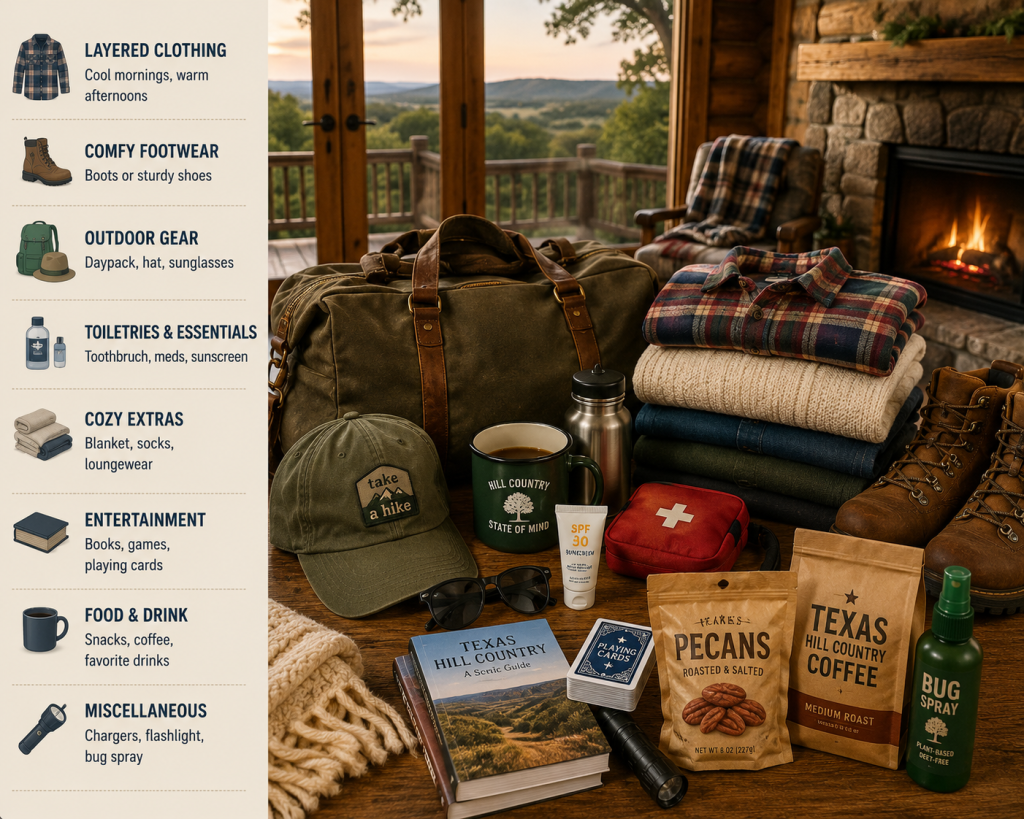
Clothing: layering system appropriate to season, sun hat, closed-toe trail shoes, water shoes, rain layer. Kitchen: your coffee setup, olive oil, spices, foil, paper towels, dish soap, zip-lock bags. Outdoor: DEET repellent (30%+), permethrin for clothes, headlamp, binoculars. Personal: sunscreen, medications, first aid kit with blister treatment. Tech: power strip, phone charger, portable speaker if desired. Documents: reservation confirmation, any medical info if staying with a group. Optional: a book, a good wine, the ingredients for one genuinely good meal you’ll remember.
For groups planning a celebration or gathering alongside the cabin stay, the resort events and weddings team coordinates the logistics that a personal packing list doesn’t cover. The event center near Blanco, TX covers additional venue options in the area. For guests who want the most private and elevated experience, the Ranch House has its own configuration and amenity set worth reviewing separately. RV travelers coming with their own rig can find their setup details on the RV resort and camping page. And for everything about the resort and starting your booking, TX Hill Country Resort is the place to start.
Frequently Asked Questions
Do TX Hill Country Resort cabins provide linens and towels?
Linen and towel availability varies by cabin type at TX Hill Country Resort. The best approach is to confirm directly with the resort at booking — the cabins and bunkhouses page details each accommodation type’s inclusions, and the reservations team can confirm specifics. If linens are provided, you eliminate a significant packing bulk. If they aren’t, or if you prefer your own, bringing a set of sheets appropriate to the bed size and a set of bath towels adds meaningful comfort without excessive bag weight. Packing one extra towel beyond what you think you’ll need is a reliable practice — outdoor activities produce more towel usage than indoor stays.
What should I know about ticks in the Texas Hill Country?
The Hill Country has a significant tick population year-round, with activity highest in spring (March through May) and fall (September through November). The primary tick species of concern are the lone star tick and the black-legged (deer) tick, both of which can transmit disease with extended attachment. Prevention: wear long pants and closed-toe shoes for any trail or brush walking; apply DEET repellent to exposed skin; spray clothing and footwear with permethrin before the trip (the protection persists through multiple washes). After any outdoor time in brush or undergrowth, do a full tick check before coming inside — particularly checking the scalp, behind ears, and behind knees where ticks tend to migrate. Remove attached ticks with fine-tipped tweezers, pulling straight out without twisting.
Is there a grocery store near TX Hill Country Resort?
The Medina area where TX Hill Country Resort is located is a small rural community. The nearest grocery shopping is in Bandera (approximately 12 miles east) or Kerrville (approximately 15 miles north on TX-16), both of which have grocery stores suitable for restocking. San Antonio is approximately 50 miles south and has all major grocery retailers. For a cabin stay with significant cooking planned, bringing the specific ingredients and specialty items from home or making a pre-arrival grocery run in San Antonio or Kerrville gives you the most efficient approach — the rural Hill Country stores serve local needs but may not have specialty items or specific products you rely on.
What is the weather like in the Hill Country for a cabin trip?
The Hill Country in the Medina area sits at approximately 1,800 to 2,200 feet elevation, which moderates temperatures compared to San Antonio and Austin. Summer highs are in the 90s°F with lower humidity than the coastal Texas areas; evenings cool to the 70s, still warm. Spring and fall offer the best overall conditions — daytime highs in the 70s to low 80s, evenings cooling into the 50s or 60s, requiring a light to medium jacket. Winter (December through February) can bring genuine cold: daytime highs in the 40s to 50s°F and overnight lows below freezing on the coldest nights. The Hill Country can receive occasional light snow in winter. Packing for the weather range — not just the daytime forecast — is the key to comfort across all seasons.
What outdoor activities should I pack for at TX Hill Country Resort?
The resort’s trail system, infinity pool, and outdoor spaces should shape your outdoor gear packing. For trails: closed-toe trail shoes or light hiking boots, moisture-wicking socks, DEET repellent, and a daypack for water and snacks on longer walks. For the pool: swimwear, a towel, sunscreen, and a hat. For fire pit evenings: layered warm clothing for sitting outside after dark, which cools significantly even in summer. If you’re planning day trips to nearby caves or wineries, the same trail shoe and layer approach applies. Binoculars are worth packing for the birding that the oak and cedar terrain rewards — the Hill Country is excellent white-tailed deer and wild turkey territory as well, and early mornings on the trails produce wildlife regularly.
What is the most important thing most people forget for a cabin trip?
Beyond the obvious personal items, the most consistently forgotten practical items for cabin trips are: a corkscrew or bottle opener (not always in cabin kitchens), a power strip (one outlet in the wrong place is a real frustration), and the specific coffee setup that makes morning work the way it should. For the Hill Country specifically: insect repellent that’s genuinely effective at the DEET concentration needed for tick country (30% or higher, not a “natural” alternative that won’t perform in this environment), and a good headlamp for evening walks in the genuinely dark rural landscape. Write your packing list the day before rather than the morning of departure — the quality of the list improves significantly when you have time to think through the actual days of the trip rather than just the immediate needs.
