

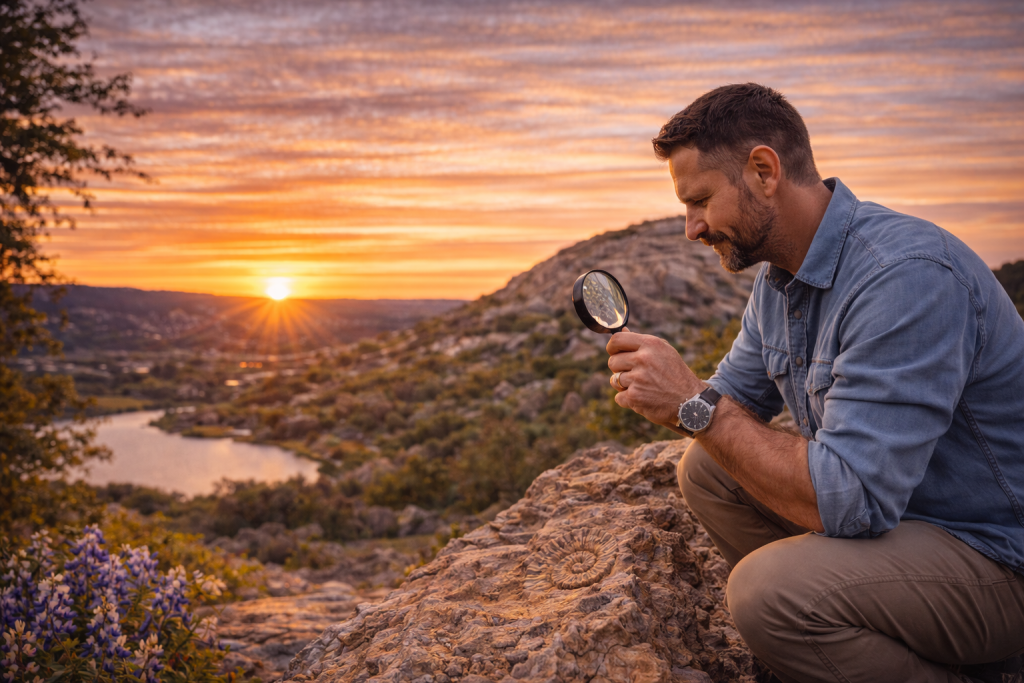
If you’ve ever driven through Texas Hill Country and felt your jaw drop at the rolling limestone hills, winding rivers, or strange rock outcroppings, you’re not alone. There’s something about this landscape — rugged yet soft, ancient yet alive — that just grabs you. But have you ever stopped to think about what lies beneath those grasses and live oak trees? What stories those rocks could tell if they could talk?
This region isn’t just pretty. It’s a geological storybook, written over hundreds of millions of years. From the coast of an ancient sea to dramatic uplift and erosion, the land here has been shaped by forces that make for some seriously awesome nature walks and outdoor adventures. If you’re staying at TX Hill Country Resort and itching to explore, you’re in the perfect place to start with the earth beneath your feet.
Let’s take a journey — not up into the sky, but down into the ground — and see what makes Texas Hill Country geology so fascinating.
What Is Texas Hill Country Geology, Really?
When people hear “Hill Country,” they often picture green hills draped with blanketing grasses and dotted with limestone outcrops. That limestone is the key to understanding this place’s geological soul.
At its heart, Hill Country geology is dominated by:
- Limestone and dolomite — ancient sea floors turned to stone
- Karst landscapes — sinkholes, springs, caves, and underground rivers
- Erosion features — sculpted over eons by water and wind
This region was once underwater — I mean really underwater, part of a shallow tropical sea that stretched across much of what is now Texas. Tiny marine organisms died, sank, and eventually formed thick layers of calcium carbonate (limestone). Over time, these layers were buried, compressed, lifted up, and sculpted into the hills and valleys we see today.
And yes — that means every step you take on these trails is on rock that’s older than the dinosaurs.
Rock Formations Around Medina TX That Tell a Story
If you’re heading out to explore local rock formations in Medina, TX, you’re in for a treat. It’s one of those spots where the geology becomes obvious once you start paying attention.
Here’s what to look for:
Limestone Cliffs and Outcrops
Limestone is everywhere here, and in some places, you can see the layering clearly as it stands exposed in cliffs or roadside cuts. These layers mean ancient oceans rising and falling, periods of sediment buildup, and long, slow changes over time.
Pay attention to:
- Visible layering
- Fossil traces (more on that later)
- Weathered surfaces that look like ripples or waves
These aren’t just pretty rocks — they’re snapshots of ancient environments.
Karst Features: Sinkholes and Springs
Hill Country is famous for its karst topography, which is a fancy way of saying the landscape has been shaped by water dissolving rock over long periods.
In areas with limestone:
- Water seeps in, carving tiny channels
- Channels join up to make larger voids
- Eventually, massive underground passages form
- Some cave roofs collapse, creating sinkholes or creeks that disappear into the ground
If you’re walking near Medina or around Dripping Springs, keep an eye out for sudden dips in the land or springs bubbling up — both signs you’re on a karst playground.
Fossils in the Field
Because this area was once ocean bottom, you will find fossils if you know where to look. They aren’t always the giant kind (like dinosaurs), but you might spot:
- Ancient shell fragments
- Coral patterns
- Ripple marks from old tidal flats
These little imprints are the ghostly signatures of creatures that lived here long before humans ever roamed. Keep your eyes peeled near creek beds or exposed rock layers — and maybe bring a magnifying glass if you’re traveling with kids.
Nature Walks That Let You See Geology Up Close
One of the best parts about Hill Country geology is how accessible it is. You don’t need special gear or experience — just a curious mind and sturdy shoes.
Here are some great nature walks and hikes where geology takes center stage:
1. Pedernales Falls State Park
Not far from TX Hill Country Resort, this park is a gem for both casual strollers and seasoned hikers. The limestone here has been carved by the Pedernales River into dramatic tiers, ledges, pools, and smooth rock slabs.
In the heat of summer, the water running over the limestone looks almost glassy, but in the cooler months, those same rocks tell a story of millennia of slow erosion.
Bring a picnic, hike out to the big falls overlook, and then sit back and watch the river do its work.
2. Hamilton Pool Preserve
This place feels almost like nature’s cathedral. A collapsed underground river created a huge grotto and pool, with a 50‑foot waterfall tumbling in on one side.
The rock here is ancient — older than much of the surrounding hill terrain — and the way it’s weathered tells you a lot about time itself. It’s shady, it’s serene, and it’s a perfect place to pause and think about how water and gravity shape landscapes.
Note: Reservations are often required, so check ahead before you go.
3. Jacob’s Well Natural Area
This place is famous among locals, and for good reason. The spring bubbles up from an underground cavern system — a classic karst feature — and the water exiting the well has carved small channels and sculpted the land around it.
Even if you don’t swim, just watching the clear water emerge from the rock is mesmerizing. It’s a great spot to really see geology at work — water exiting where rock meets weakness.
How to Read the Land Beneath Your Feet
Here’s the fun part: once you start paying attention, you’ll see that the ground under you is like a timeline. Here’s how to “read” it like a storybook.
Layering = Time Passing
When you see horizontal layers of rock, that usually means different periods of sedimentation — old sea floors, river deltas, or shifting coastlines. The lowest layers are older. Simple as that.
Rounded vs. Jagged Edges
Rounded stones or rock faces tell you there’s been a lot of water or wind smoothing them over time. Sharp, jagged edges might mean more recent exposure or less erosion.
Caves and Voids
If you spot a cave entrance or shallow hollow, you’re seeing karst at work. Limestone dissolves in slightly acidic water — rainwater mixed with carbon dioxide in the air — and over ages, it creates underground passages. Sometimes that collapses, and out pops a sinkhole or grotto.
Fossil Clues
If you handle a rock and find tiny shell shapes or ripple marks, that’s fossil evidence that this place was once underwater. Those marks aren’t just random shapes — they’re historic artifacts.
Outdoor Activities That Let You Touch Geology
Geology isn’t just for quiet observation. You can make it part of active exploration — and it’s fun for folks of all ages.
Rock Hounding (Responsibly!)
Out here, you can find small fossils, cool rock shapes, and interesting mineral bits. Just remember:
- Only take small samples
- Don’t damage protected areas
- Leave big formations where they belong
It’s the nature enthusiast’s version of a treasure hunt.
Photography Walks at Golden Hour
That early morning or late afternoon light does wild things to textures. Limestone walls glow. Shadows stretch. It’s a blast for both casual shots and more artsy tries.
A short walk near TX Hill Country Resort at sunset can turn up some gorgeous geology photos.
Stream and River Exploration
Many of the most interesting rock formations are near water. Creeks and rivers cut into the landscape, exposing layers that tell you about both time and change.
Splash around, follow a stream upstream, and notice what the water uncovers.
Why Geology Matters — Beyond Rocks
Learning about geology doesn’t just make you smarter about rocks (though that’s cool). It gives you context. It makes the land feel alive. It helps you see that the world didn’t just pop into place — it’s been shaped by forces far greater and far slower than our lifetimes.
And when you’re out on nature walks studying Hill Country geology, you start to see links between the land and everything around it — plants, animals, rivers, even the weather.
It’s a way of connecting more deeply to the place you’re visiting.
FAQs: Texas Hill Country Geology
Q: What makes Hill Country rocks unique?
A: Most of the rocks are limestone and dolomite from ancient seabeds. That gives the land its characteristic rolling hills and karst features like caves and springs.
Q: Can you find fossils in Medina TX?
A: Yep! Look for shell remnants and ripple marks along old limestone beds. Just don’t remove anything from protected areas.
Q: Are guided geological tours available?
A: Some parks and preserves offer ranger‑led talks or guided walks that include geology. It’s worth checking their calendars.
Q: Is rock hounding allowed everywhere?
A: No. Only in some areas. Always check with local land managers or park staff before collecting anything.
Q: What’s the best time of year for geology walks?
A: Spring and fall are ideal — mild temps, blooming landscapes, and water in the creeks that make geological features easier to spot.
Final Thoughts
If you’re staying at TX Hill Country Resort or roaming around Medina TX and beyond, take a little extra time to look down as well as ahead. The ground beneath your feet is like a living history book, full of ancient seas, shifting continents, and slow dances between water and stone.
It’s easy to fall in love with the views from a scenic overlook, but once you start noticing the stories told by the rocks under your boots? That’s when Hill Country reveals a deeper kind of beauty.
So go on — turn your next wa
